



CIO Conference December 2018
CIO organized a conference entitled "Managing IT Department Performance" at the Paris Trocadéro business center on December 4, 2018, in partnership with AppDynamics, Crayon, DMI/Matrix42, Invivoo, and SDM Conseil.
Providing the best IT service at the lowest cost is obviously a requirement for all CIOs. The difficulty, of course, lies in the means and methods used to achieve this. There may also be difficulties in defining what is meant by "best service." And the concept of "lowest cost" can also reveal surprises, as some purchasing strategies may seem attractive at first glance but turn out to be ruinous, for example in the cloud. To gain a clearer understanding and share best practices, CIO organized a morning event entitled "Piloting IT Department Performance" at the Paris Trocadéro business center on December 4, 2018, in partnership with AppDynamics, Crayon, DMI/Matrix42, Invivoo, and SDM Conseil. Each partner was given the opportunity to take the stage and present their expertise.
To open the conference, CIO unveiled the main findings of its study entitled"How can IT departments guarantee performance?" The least we can say is that, if we are to believe the responses provided, ordinary companies are far from applying best practices. In most cases, there is little or no knowledge of legacy costs or the possibilities for upgrading. Budget decisions are rarely made based on business expectations. And performance is not measured (or only minimally). Fortunately, the speakers who took the stage were able to explain best practices.
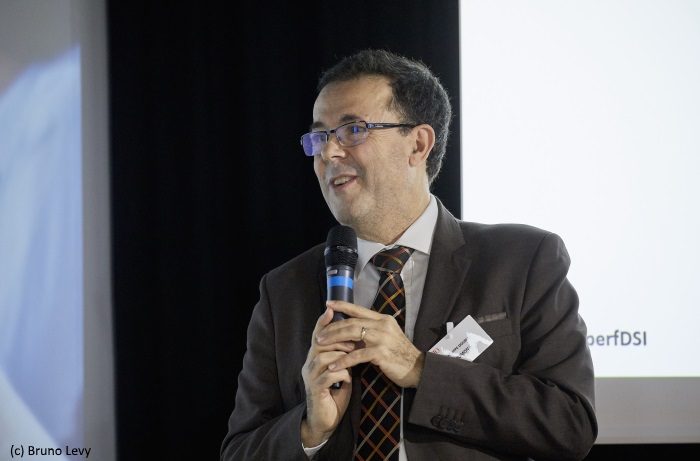
Philippe Doublet, CIO of Pomona, showed how to prioritize reliability.
The first to speak, Philippe Doublet, CIO of Pomona, recalled how IT served the business lines of this B2B food distributor, a full-service wholesaler with 2,000 trucks delivering to restaurants, stores, and communities. Pomona's absolute priority is reliability. "The intelligence of our business lies partly in customer relations and partly in flawless execution, with supplies having to be delivered without incident," explained Philippe Doublet. The slightest breakdown could bring the company's operations to a standstill, which would be unacceptable.
With IT thus being entirely central to the business in a company with stable family ownership, Philippe Doublet considers himself a "lucky CIO." Investments are always made with a long-term perspective, without dogma, taboos, or fads. And the company's culture and processes prohibit shadow IT. However, traceability and customer relations are driving a desire for digital technology and even blockchain.
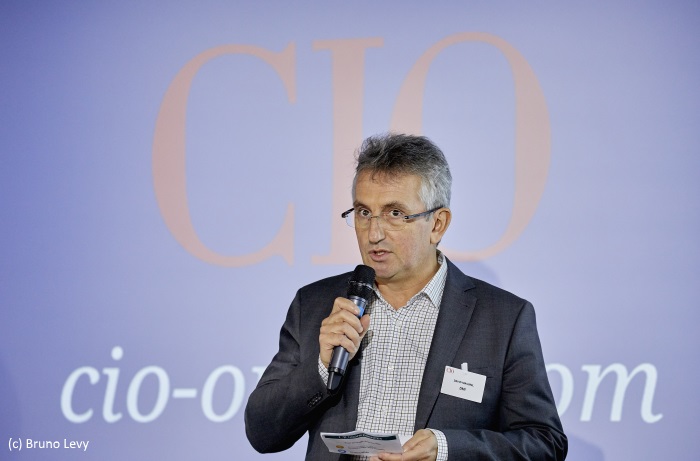
David Masurel, CEO and Chief Commercial Officer of DMI, presented the service catalog as a showcase for the IT department.
To deliver the excellent service expected by the business, it is necessary to define exactly what services are offered. For David Masurel, CEO and Sales Director of DMI, the service catalog is therefore the showcase of the IT department. While the firm is agnostic in terms of tools, David Masurel believes that Matrix 42 is a gem. "Before you can manage, you have to master," he insisted. And that is precisely what Matrix 42 does, covering the entire software lifecycle, including the private application store and contract management (i.e., SAM).
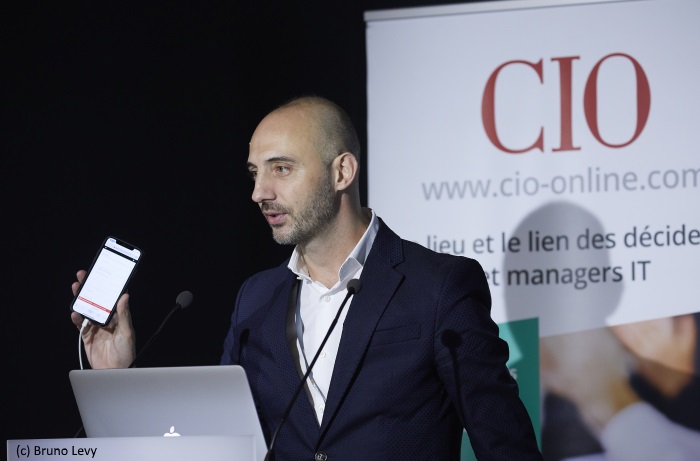
Sergio Ribeiro, Pre-sales Manager at Matrix 42, gave a demonstration of the publisher's product.
Since a good demonstration is worth a thousand words, Sergio Ribeiro, Pre-sales Manager at Matrix 42, then presented the main features using a fictional case study. The demonstration was carried out using a 4G mobile connection (with relay via a smartphone) and the SaaS version of the product.
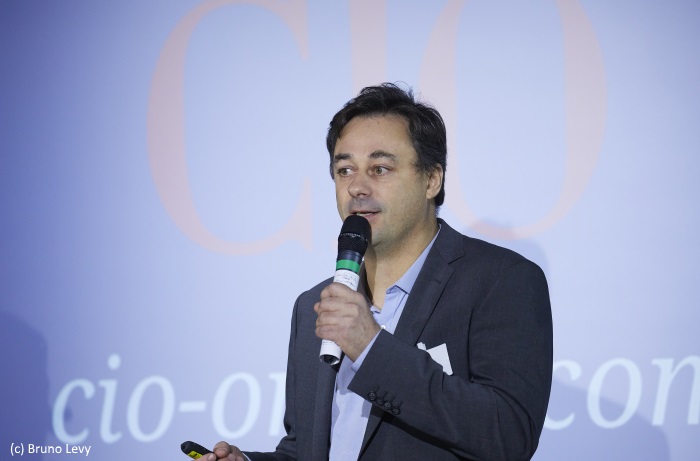
Marc Boullier, CIO of Carambar & Co, explained how to set up and develop an IT system following a split.
Another aspect of IT department performance in a highly constrained industrial context was provided by Marc Boullier, CIO of Carambar & Co. This is a young company, founded on May 2, 2017, following the split of Mondelez International and the acquisition by French company Eurazeo of Carambar, Poulain, Suchard, etc., before acquiring Lutti. As a result, he had to build his own information system. The challenges were significant, both industrially and in terms of IT.
But there is a notable difference between Mondelez, with €40 billion in revenue, and Carambar & Co, which is worth only €250 million. However, Carambar & Co's IS was initially a duplicate of Mondelez's IS (with data cleansing). Marc Boullier then explained how this IS was optimized and put on the path to digitalization.
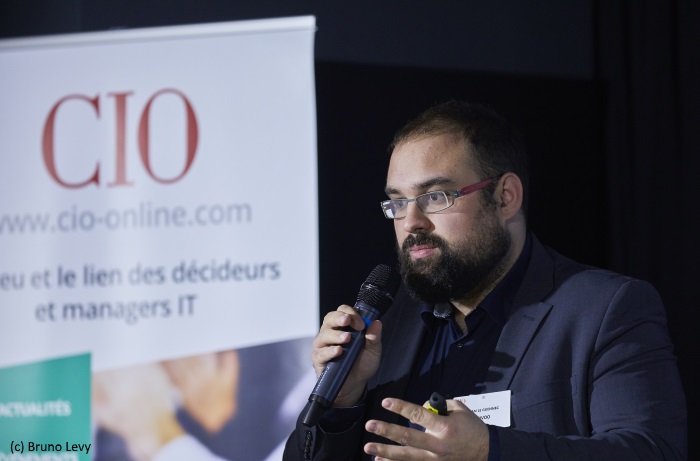
Erwan Le Guennec, Xcomponent Product Manager at Invivoo, explained how to give the business the freedom to manage its scenarios without IT risk.
Supporting CIOs in this type of transformation is precisely the specialty of Invivoo, which also publishes software under the Xcomponent brand. Having the best application portfolio in the world is useless if the applications are not used. "Our tools ensure that IT tools are used," explained Erwan Le Guennec, product manager. The aim is to guarantee both time2market (speed of change on demand) and time2result (speed of adoption by users).
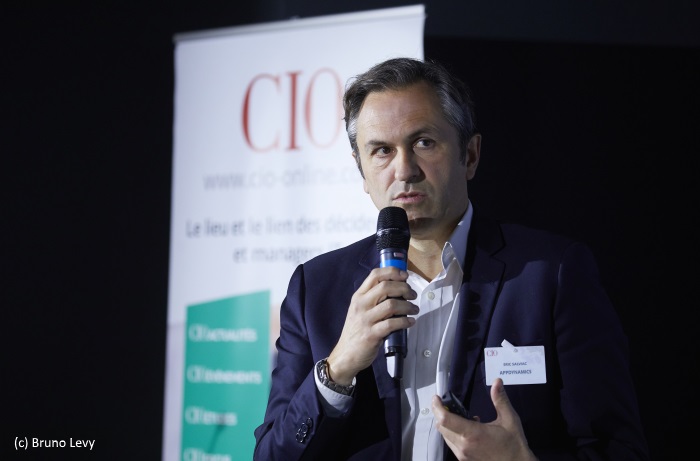
Eric Salviac, Business Value Consultant at AppDynamics, explained how to drive digital business through application and economic performance management.
"We are all transforming our IT departments, but only 22% of CIOs are optimistic about their ability to succeed," said Eric Salviac, Business Value Consultant at AppDynamics. He spoke about how to drive digital activity through application and economic performance management. Traditionally, he believes there is a blind spot when it comes to IT performance, between pure technical performance and business performance. AppDynamics believes that a mixed approach is needed to put performance at the service of business lines. Effective service levels must be quantified to inform both business lines and IT departments.
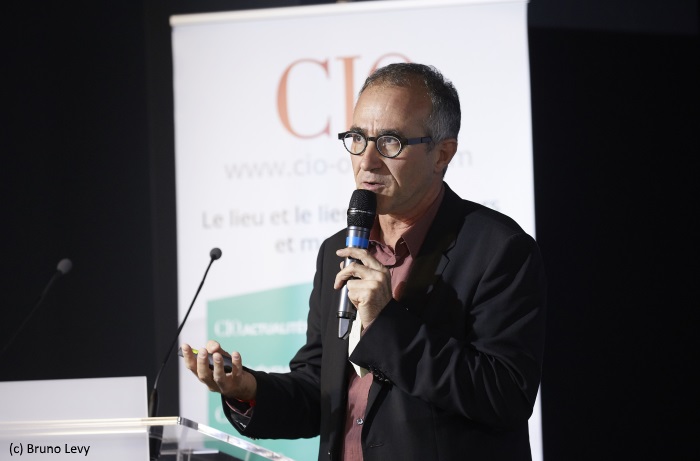
Laurent Francfort, Senior Cloud Architect at Crayon, presented methods for migrating legacy systems.
Among the elements of IT efficiency, there is one essential point: reducing costs. This requires knowing how to manage contracts with IT suppliers, particularly software licenses. Speaking on "Legacy migration: the best opportunity to reduce costs and increase agility," Laurent Francfort, Senior Cloud Architect at Crayon, explained that traditional SAM has evolved to include all types of services, particularly cloud services. "We need to change the way we consume IT," he argued.
He added: "Too many customers think that because everything is in a public cloud, they no longer have anything to do. That's not true. Applications need to be monitored. If there is a problem with the infrastructure, the cloud provider will notify you, but you need to have the means to respond." In addition, it is necessary to be able to anticipate costs and manage them effectively, even though billing is based on time, storage, bandwidth consumption, etc., in short, on indicators that are not easy to track.
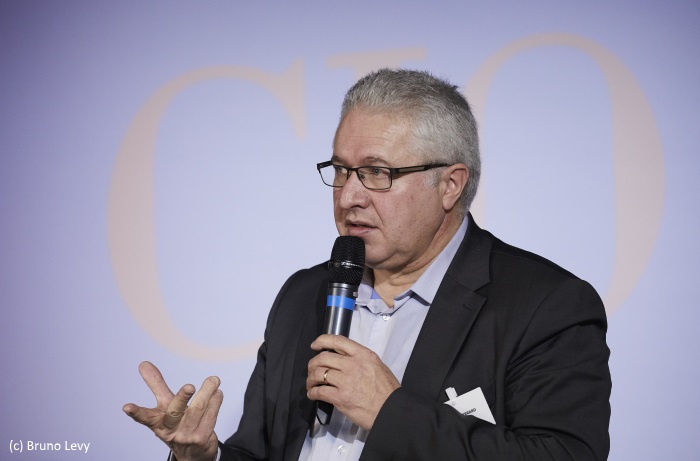
Jean-Luc Perrard, CIO of PSA Group, was the keynote speaker for the morning session.
The keynote speaker for the morning, Jean-Luc Perrard, CIO of the PSA Group, discussed the role of IT in reviving PSA's business. The group now includes the Peugeot, Citroën, DS, Open, and Vauxhall brands. He also detailed the optimizations made to meet the constraints imposed by the group's strategy.
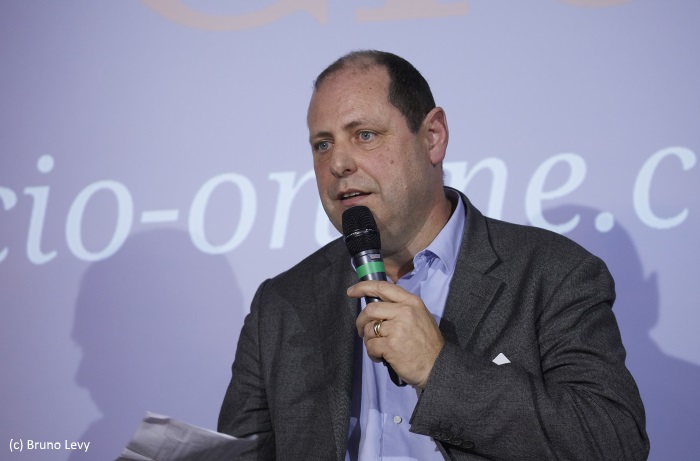
Emmanuel Lalau, partner at SDM Conseil, advocated for managing the productivity of IT developments.
One of the key factors in ensuring IT performance is knowing how to manage the productivity of IT developments, from the project phase to third-party application maintenance (TMA). This was the subject of the presentation by Emmanuel Lalau, partner at SDM Conseil. Software development productivity requires, on the one hand, purchasing the project from IT services companies and, on the other hand, knowing how to achieve optimal operational efficiency in TMA. "To calibrate estimates based on market standards, you need to allow for 4 to 5 days of intervention for every 1,000 man-days purchased," explained Emmanuel Lalau.
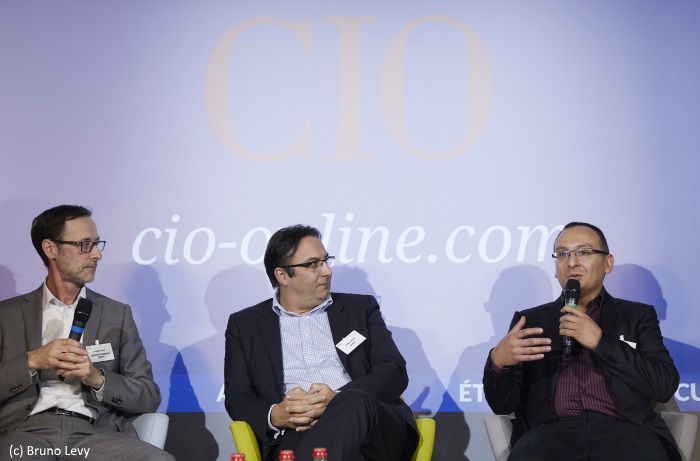
The round table discussion entitled "Adapting IT systems to business constraints and expectations" brought together (from left to right) Thierry Saive (Director of IT Operations, Europcar Mobility Group), Laurent Dirson (Director of IT Production Business Applications, Nexity) and Farzad Farid (Senior Infrastructure & Operations Manager, Chauffeur Privé).
To conclude the morning session, a round table discussion on the topic of "Adapting IT systems to business constraints and expectations" brought together Thierry Saive (Director of IT Operations, Europcar Mobility Group), Laurent Dirson (Director of IT Production Applications, Nexity), and Farzad Farid (Senior Infrastructure & Operations Manager, Chauffeur Privé). Thierry Saive explained the important role of server log exploitation in optimizing performance, in addition to traditional APM tools. He also implemented an adaptation of storage to business needs. Farzad Farid presented the use of containers under different technologies, from Heroku to Docker/Kubernetes. Finally, Laurent Dirson explained how he evolved the traditional information system towards a cloud-based architecture.